Getting Started in Karting: What TO Do
More than 10 years after my first attempt to start kart racing, here is how I learned from past mistakes and found success. (Read about my first attempt here). Finding myself in a new city, with a bit more disposable income, it was time to give it another go. The older and wiser me knew the value of research and planning. I made up my mind to learn which classes people raced locally, and do it the right way.
Choosing the LO206 Engine Class
This time around I knew that purchasing the chassis and motor would be only part of the expenses, and prepared a budget for parts, fees, tires, wear and tear, and traveling to the track. One class was the obvious choice in the DMV area (Washington DC, Maryland, and Virginia): LO206 racing.
By the 2010s, 2-stroke racing had grown prohibitively expensive for many people. Briggs & Stratton introduced a solution by developing a new, factory sealed 4-stroke engine called the LO206 (Local Option 206cc). The new engines lasted much longer than 2-stroke engines, lowered costs, and helped even the playing field by standardizing components and regulations.
Better informed, I called up my closest track – United Karting near Baltimore — to make sure that they had LO206 racing there. Satisfied, I trawled forums like KartPulse, craigslist (RIP), and FaceBook Marketplace until coming across an old Intrepid chassis with an LO206 bolted onto it. The kart was owned by a road racer who raced at Summit Point Motorsports Park in West Virginia (a track known for its longer road course that recently reopened a sprint track as well). I was off to the races.
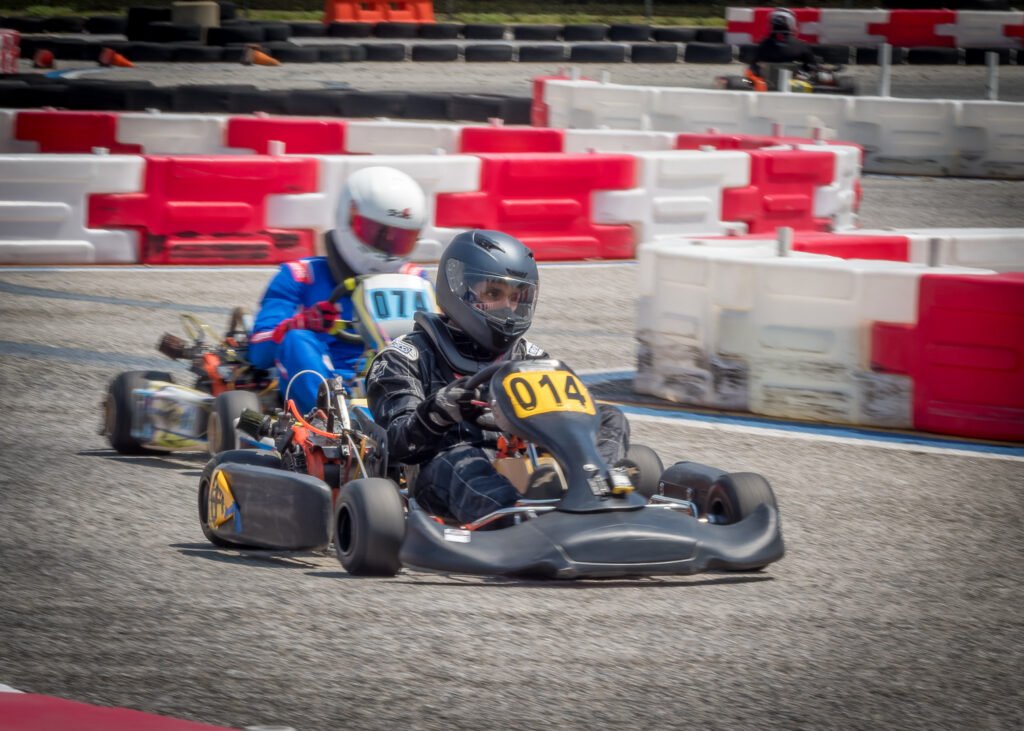
In my first few trips to United Karting, I learned the requirements to race there, and shook the kart down, getting it mechanically all dialed in. The next few months of club racing flew by, as I progressed from the point where just finishing a session without any issues gave me a feeling of accomplishment, to focusing on results.
Learning my Local Go Kart Track
There are three main components to club racing classes – weight, tires, and engine type, plus any rules about age restrictions for kids (and older drivers!). Seeing that the track offered a “heavy” LO206 class, which required the total weight of kart and driver to be 390 lbs, I figured that was the one for adults (me) and got to work bolting a lot of lead scuba diving weights onto my kart to qualify for participation.
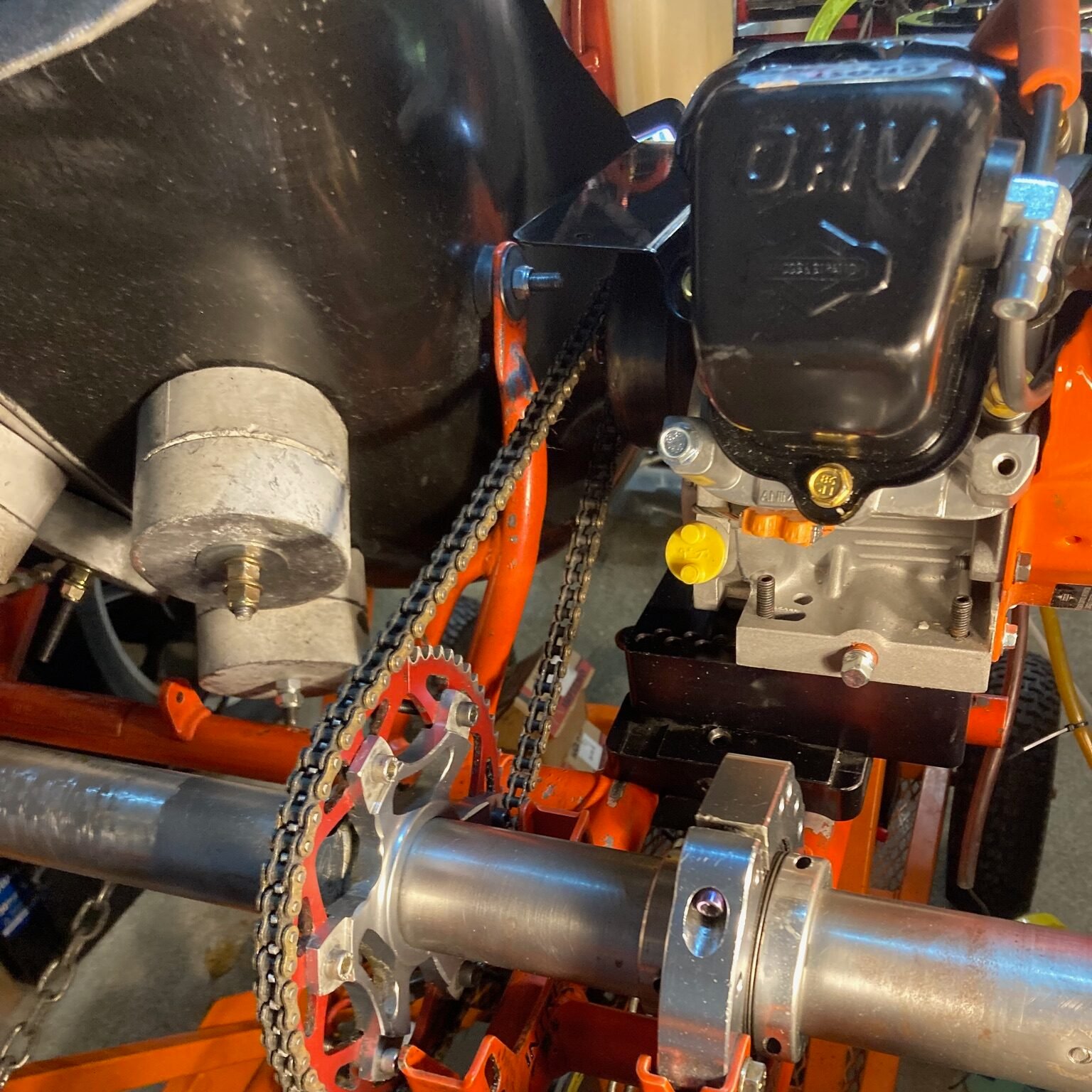
At least seven 5lb scuba weights bolted onto the seat qualified me to race in the heavy class.
I got lucky, because although being heavy did not necessarily mean I’d end up racing with more drivers my own age, the heavy class turned out to be smaller and less competitive than the light class (340 lbs), which took some pressure off starting out. It was worth the weight, and turning my seat into Swiss cheese mounting all that lead!
Had I spent just a little more time learning about United Karting before buying the kart, or even gone to a race or practice day, I would’ve known the track’s shop specializes in CompKarts and Birels. I might have saved myself a few headaches by starting with one of those. When you buy what the track stocks, you will always have spares available, and when you are first starting out, you will need them! That said, I have since cycled through Compkart AND Birel chassis and will save that journey for a future post….
Start with Rental League Racing Before Buying a Kart
My advice if you are considering getting into karting, is to start one step before all of this, and check whether tracks near you offer league racing with rental karts. For instance, United Karting runs two rental league series. One series runs on its regular rental karts that are suitable for anyone. The other is more competition-focused and races on a dedicated fleet of Birel karts with potent 2-stroke engines and a lighter chassis. Rental league racing is an excellent way to race competitively and hone your skill, before committing to the cost of owning a competition go kart. At United, these faster rental karts even race alongside the competition karts in practice and will give you a good idea of what it’s like.
Explore Additional Tracks as you Improve
Once I got comfortable racing at United, I ventured to other local tracks, beginning with the twisty, technical track at Sandy Hook Speedway, which is an awesome place to race with its tight infield and banked final corner. Next, I made it out to Nicholson Speedway, another Maryland track with a combination of fast sweepers, a hairpin, and some 90-degree corners. Their annual Turkey Race always pulls a huge field and is a really fun event where every driver gets a turkey! The Turkey Race has become my end of season tradition.
Apart from racing other drivers and meeting new people, exploring new tracks has challenged me to be competitive when I’m much less familiar with setup and conditions, passing zones and the like. These are key skills that are essential if you want to move up to traveling for regional races, where you will only have one practice day to get up to speed before race day.
After five seasons of club-level racing, I still rave about LO206 and don’t plan on “moving up” to a 2-stroke class. For now, I am focused on improving my pace and consistency to participate more regularly in regional races, which is the next step up from club racing. LO206 is the most widely raced class in the US. It’s a great place to start your competition karting journey, and is even a great place to stay!